First published 24 July 2025
How Do We Turn Stress into a Secret Weapon?
Last week, I mentioned I had a choice of three topics I wanted to talk about, so that made my choices a little easier this week😉 (especially as I have now forgotten what the 3rd one was!)
In the book “Peak Performance” (I finished it earlier this week), the authors had a heavy focus on “stress”, and not in the way I expected!
Ordinarily, that word has the habit of forming an all too familiar knot in the stomach.
You know the one.
That instant “oh no, not more stress – run away” reaction most of us have been conditioned to have.
Even the authors admit to feeling a sense of dread when they mention or think of stress.
It’s become such a loaded word, hasn’t it?
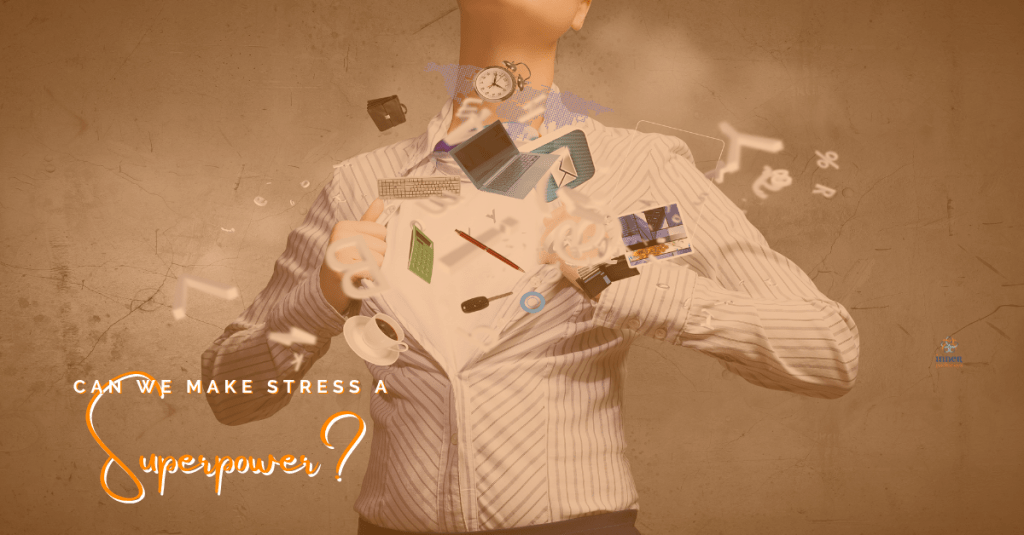
We’ve been told so often that stress is the enemy (the thing that’s ruining our health, our relationships, our sleep, our sanity), so much so that we’ve forgotten something crucial. Not all stress is created equal.
The Stress We’ve Been Missing
Would you be surprised to learn that some of the most fulfilling moments in our lives may have involved stress?
That promotion you worked toward, the challenging workout that left you feeling accomplished, learning a new skill that pushed your comfort zone, even falling in love – all stressful, all potentially transformative.
The difference isn’t whether stress is present; rather, it’s what type of stress we’re dealing with and how we frame it.
Acute stress (the short, sharp bursts that challenge us and then allow for recovery) can, and likely will, make us stronger, more resilient, and more capable. Think of it like lifting weights for your entire system.
Chronic stress (that relentless, ongoing pressure with no relief valve or off switch) is what causes the damage we associate with the word “stress.”
Rewriting the Story
From a kinesiology perspective, our body’s response to stress isn’t inherently good or bad, like most things we deal with; it’s just information.
When I use muscle response monitoring on someone who’s talking about a challenging situation they’re navigating successfully, their body often shows strength.
On the other hand, when they discuss chronic, unresolved stress, the muscles typically unlock or “weaken”.
The difference?
The story they’re telling themselves about what’s happening.
Due to this difference, the challenge isn’t to eliminate all stress (which would be impossible and frankly quite boring), but to ensure we’re not chronically overwhelming any one system, and we are reading it in a helpful way.
So, what’s going on in the different systems when stress is present, and how can this information help us channel the stress better?
Wood element stress (liver/gallbladder) comes from feeling stuck or frustrated. When we channel it properly, it becomes the drive for growth and change.
Fire element stress (heart/small intestine) relates to overstimulation and excitement. This typically manifests in a way that can create joy and connection.
Earth element stress (stomach/spleen) involves worry and overthinking. When balanced, it can be harnessed into careful planning and nurturing.
Metal element stress (lungs/large intestine) stems from grief or letting go. If we process this in a healthy way, it leads to wisdom and release.
Water element stress (kidneys/bladder), this is about fear and overwhelm, but it’s also the source of our deepest strength and resilience.
The Magic Formula: Stress + Rest = Growth
Here’s where it gets interesting.
Muscles don’t grow during a workout – they grow during recovery.
The brain doesn’t consolidate new learning during intense study – it happens during rest and sleep.
Even the immune system strengthens not during the challenge, but in the recovery phase afterwards.
This is the pattern that “Peak Performance” highlights brilliantly:
stress + rest = growth.
Without the stress (the challenge, the push, the stretch), there’s no stimulus for improvement.
Without the rest (the recovery, the integration, the restoration), the stress becomes destructive rather than constructive.
Think about your chakra system for a moment.
Your solar plexus chakra thrives on appropriate challenges that build confidence and personal power.
But, without the balancing influence of your heart chakra (connection and self-compassion), that same energy transforms into anxiety and burnout.
So, Can We Harness Stress for Good?
The question isn’t “How do I eliminate stress?” but rather “Where in my life can I choose beneficial stress while minimising the chronic, destructive kind?”
Physical stress: That challenging workout, the cold shower (rather you than me!!!), the hike that gets your heart pumping. Followed up with proper rest and recovery.
Mental stress: Learning something new, solving complex problems, and engaging in stimulating conversations. Don’t forget to balance this with downtime and mental rest.
Emotional stress: Having difficult but necessary conversations, setting boundaries, pushing through comfort zones. Make sure to support this with self-care and emotional processing.
Creative stress: Taking on projects that stretch your abilities, performing, putting your work out into the world. This is naturally coupled with periods of creative rest and inspiration-gathering.
Controlling the Narrative
Your nervous system responds not just to what’s happening, but to the story you tell yourself about what’s happening.
When you frame a challenge as “this is going to destroy me,” your body prepares for destruction.
When you frame the same challenge as “this is going to stretch me and help me grow,” your body prepares for growth.
This isn’t about toxic positivity or pretending everything’s fine when it’s not. It’s about recognising that you have more control over your physiological response than you might think.
Your Stress Reframe Challenge
This week, I’d love for us to experiment with flipping the script on stress:
Identify one area where you could benefit from choosing a bit of “good stress” – perhaps that challenging project you’ve been putting off, the exercise routine that feels intimidating, or the skill you’ve been meaning to learn. You don’t have to go for the most ‘stressful’ thing on your to do list, just pick something that stretches you beyond the norm of your comfort/familiarity zone.
Notice your chronic stress patterns. What ongoing situations are draining your energy without offering growth? How might you address these or at least create better boundaries around them?
Practice the stress + rest equation. If you’re going to challenge yourself in one area, where will you build in recovery? If you’ve got unavoidable stress in your life, how can you create pockets of restoration?
Reframe your stress story. The next time you feel that familiar stress response, pause and ask: “Is this stress that’s trying to help me grow, or stress that’s wearing me down?” Then respond accordingly.
Listen to your body’s wisdom. Your meridians, your chakras, your muscle responses – they all have information about whether the stress you’re experiencing is serving you or draining you.
The Bottom Line
Stress isn’t the enemy we’ve been told it is.
Like fire, it can be destructive or incredibly useful, depending on how we handle it.
The goal isn’t to live a stress-free life, as that would lead to a growth-free life.
The goal is to become skilful at choosing beneficial stress while minimising chronic, destructive stress.
Your body is designed to handle challenges and come back stronger.
Trust that design.
Use it intentionally.
And always, always follow stress with rest.
What story will you tell yourself about the stress in your life this week?
If you’re struggling to distinguish between beneficial and harmful stress in your life, or if you’d like support in building better stress + recovery patterns, I’m here to help. Sometimes we need an outside perspective to see our patterns clearly.
 Inner Pathways
Leave a comment