First published 20 February 2025
Do as I say Not as I Do!
Don’t you just love it when your friend throws your advice right back at you?!?!?
I was out for coffee this evening with a friend who is to blame responsible for my current career choice, after I mentioned that I was feeling a bit off, I think in part due to the book I am reading for book club (the Highly Sensitive Persons Guide to Dealing with Toxic People 😲 – I haven’t finished it yet, but I don’t think I will be recommending it!), her suggestion was that perhaps I should take my own advice and journal!
Even though she wrapped it up in a pretty bow by saying it was good advice, internally I was covering my ears and shouting “la la la la I can’t hear you” toddler style – well I guess it was better than internally screaming, that can be loud!!
This coupled with a lovely client asking me to write about Gratitude Journaling and I am feeling decidedly picked on!
And you know what that means – right? Yep, it is time to get the pen and paper out and get the thoughts out of my head and on to paper!
So C and H – this one is for you both!
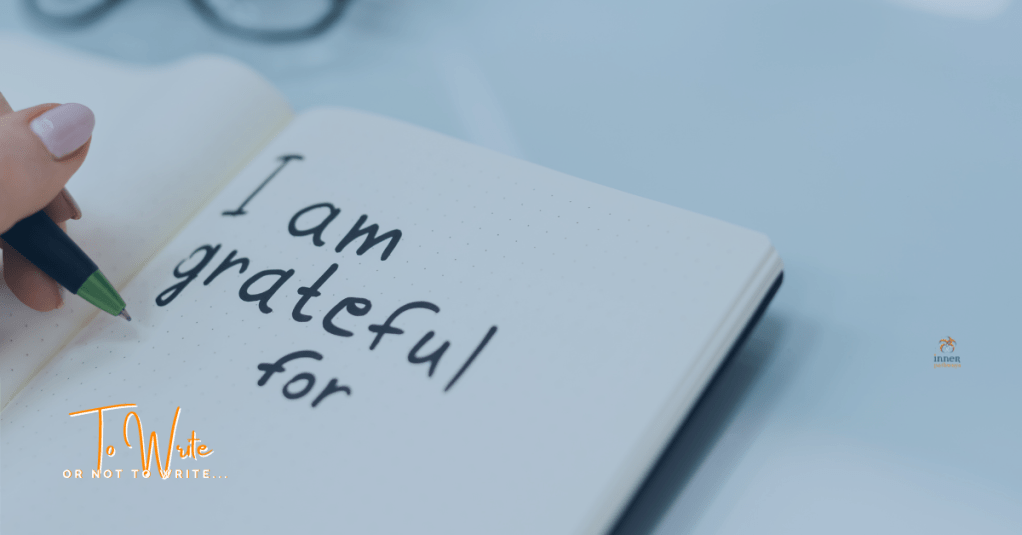
What is Journaling and Why Would you want to do it?
In this fast-paced world we are living in, finding moments of calm and self-reflection can feel like a luxury rather than a necessity.
Yet, in the middle of the digital noise, the simple practice of journaling offers a powerful antidote. Taking pen to paper, or fingers to keyboard, can unlock a surprising range of benefits for our wellbeing.
Journaling isn’t just about scribbling down your daily activities like a glorified calendar.
It’s a tool for self-discovery, stress management, and emotional processing.
Whether you’re exploring your thoughts, reflecting on your experiences (or whatever else is percolating in our minds), or simply jotting down what you’re grateful for, journaling can make a real difference.
The Science Behind the Scribbles
There’s more to journaling than just putting words on a page. Studies have shown that expressive writing can reduce stress hormones like cortisol and improve immune function. It can also help regulate emotions, improve sleep quality, and even boost cognitive function. When we write about our experiences, we create a narrative, which helps us make sense of what’s happening and integrate it into our lives.
Gratitude journaling, in particular, has been linked to increased happiness, optimism, and resilience. By focusing on what we’re thankful for, we shift our perspective and cultivate a more positive outlook.
So Why do some of us Experience Resistance?
If journaling is so good for us, why do so many of us struggle to get started (or to keep going when we do get started)? There are a few common hurdles:
- Time: “I don’t have time” is a common refrain. Even 5 minutes of journaling can be beneficial. Start small and build from there. And choose for yourself whether you do it when you first wake up, just before bed or at any other point between the two! Just because some people think ‘morning pages’ are the only way to go, doesn’t mean that’s the right way for you!
- Fear of the blank page: That empty page can feel daunting. Don’t worry about perfect grammar or eloquent prose. Forget about messy handwriting or the ‘what if I get it wrong/make a mistake’. And if the thought of writing in your pristine and beautiful journaling book that you bought that is too pretty to use… – grab some printer paper and use that, or shock horror, draw a doodle on the first page to to break through the ‘it’s too pretty’ chatter! Just let your thoughts flow freely. (and if paper doesn’t feel write, fingers on a keyboard or phone screen with a journaling app can be just as effective!)
- Self-criticism: We can be our own harshest critics. Remember, journaling is for you. There are no rules, no right or wrong way to do it. And no one says you ever have to even read it after you have brain dumped it out of your head!
- Lack of inspiration: Sometimes, we simply don’t know what to write about. Prompts can be handy for this, focusing on a specific theme, or simply starting with “I’m feeling…” or “I thank you/me for…”. If you want a bit of structure Google and/or Gemini can be helpful (other search engines and AI tools are available!). Search for journal prompts or ask AI to create you a series of them on whatever topic may be floating around in your head.
Making it Happen
The magic ingredient is finding what works for you – don’t be afraid to have a play, trial and error is ok too!
Whether it’s a dedicated notebook, a digital document, or even just a few lines in your phone, the important thing is to begin.
Don’t put pressure on yourself to write every day. Even a few times a week can make a difference. Experiment with different styles, find a time that suits you, and create a space where you feel comfortable and relaxed. You don’t have to set a minimum time or word/page count either!
Just allow the words to flow. Journaling can be a powerful tool for self-care and personal growth. It’s a chance to connect with yourself, process your emotions, and cultivate a greater sense of wellbeing. So, grab a pen, take a deep breath, and give it a go. You might be surprised at what you discover.
I’m off to just that right now! (and I only feel a teeny bit bullied in to it 😉🤣)
If you would like some help pulling together a bank of prompts, please do reach out and we can work on it together to find just what you need to get you started!

 Inner Pathways
Leave a comment